We’re missing the outdoors a little too much this month. In an attempt to fill the void, this month’s documentary is focused on adventure with Under An Arctic Sky.
One of our favorite adventure inspirations is Chris Burkard, a self-taught photographer and well-known explorer. Burkard’s work focuses on exploring some of the coldest and most remote parts of the world, taking him to some of the most epic places on the planet. Under an Arctic Sky is a 40-min documentary in collaboration with Sweatpants Media. The film follows six surfers on their quest to ride the best waves in Iceland, in the middle of winter, with one of the most brutal storms to hit the island in 25 years. Why? Burkard says, “Winter provides the most ideal conditions for surf in the country, and our main goal for the trip was simple: to find world-class surf.”
The film spoke to every single adventurous bone in our body. We. Could. Not. Stop. Smiling. It was so beautifully shot and truly showcased adventure in its purest form. Even during moments of uncertainty, they trusted one another and kept positive attitudes. It was raw and real. Burkard says, “The risk is kind of key to the joy. Without risk, the reward isn’t as sweet.”
If you love the outdoors and want to watch a group of free-spirited and adventurous surfers riding waves, we think you’ll enjoy this.
You can find Under the Arctic Sky on Netflix now.
Cheers, Jennifer and Vivian
Photo Credit: Yellowstone National Park. Enjoying the night sky, Mammoth Hot Springs. NPS photo by Neal Herbert.
Annie currently works in social media for the global brand, Daniel Wellington and as a sales associate for Madewell. During the weekends you can find her exploring coffee shops and restaurants, or at home sleeping. She’s been taking small steps to improve important aspects of her life, specifically in her health and finances. For Annie, small steps tie into her goal to live a more sustainable lifestyle.
What does ‘sustainability’ mean to you? I don’t have a technical definition of sustainability. The way I define it is with the three R’s: reduce, reuse, and recycle.
What led you to be more aware of your impact on the planet? Growing up, my mom and grandmother had a huge influence on me. They taught me how to conserve toilet paper and reuse cloth scraps for napkins. Recycling is a big thing in my family too, which makes me frustrated when I see people throw bottles and cans into the trash bins instead of the recycling bins. I’ve also seen videos about how plastic can travel through different channels and end up in our oceans. Reading Tinycaravan’s articles, seeing companies practice sustainability, going to national parks, and educating myself through museums and classes have also helped me with this journey.
How have you changed your actions after learning more about our impact on the environment? When I used to visit national parks, beaches, or any natural areas, I would take home shells, pine cones, leaves, or rocks to commemorate the trips. After visiting more parks and educating myself through the information placards, I’ve learned that taking these resources away from their natural space hurts the environment. If I take a pine cone home, it’s just going to sit on my desk and collect dust. It’s nothing more than just a decoration. Now, I don’t take anything home because they benefit the park, decompose at some point, and start their new life again.
That’s so great! We love that you practice the “Leave No Trace” rule. Do you also practice sustainability in your everyday life? A lot of my practices are made through my purchases. If I shop online on Amazon, I’ll wait for two weeks to combine all the items so that it can be delivered in one shipment. I think it helps to reduce energy. Last year I also stopped buying Christmas presents. Most of the time, they end up being material things that don’t hold value and are left in the closet. These practices have helped me be more conscious about what I ‘want’ versus what I ‘need.’
“I’ve stopped buying more things because (a) I don’t want to waste money, (b) I don’t have anywhere to put it, and (c) it’s just wasteful.”
Are there other ways you practice sustainability in addition to your purchasing habits? Tinycaravan talks a lot about this on their blog: I bring my own reusable utensils. My company eats out often, so I’ll keep a set of utensils at work (a butter knife, spoon, fork and a pair of chopsticks). It’s so easy to bring your own utensil set; you don’t even need to go out and buy a new set, you can just bring what you have from home. Two of my co-workers took notice and even started to bring their own. I find that really cool.
What is one of the biggest changes you’ve made since living a more sustainable lifestyle? One of the biggest changes I’ve made is cutting down on the amount of time I spend in my car. I take the Metro to work and commute about 3.5 hours per day. I figured since driving to work would take the same amount of time, there and back, I would be decreasing my carbon footprint by taking the Metro. Also, I would probably be angry and cranky 24/7 if I sat behind a wheel for that long of a period.
Are you constantly finding ways to live more mindfully and with intent? I’ve always wanted to practice ‘less is more’ in regards to my personal wardrobe. One of my goals moving forward is to add less to my closet. It’s so easy to cave in to trends rather than invest in timeless and classic pieces. I’m slowly eliminating purchases from fast fashion companies. I used to shop at Forever 21, H&M, and Zara. They were affordable, but the quality was poor. Over time, I learned that many of those companies do not engage in ethical business practices. Since I’ve stopped shopping at fast fashion companies, I realize I don’t care about trends as much. I’ve stopped buying more things because (a) I don’t want to waste money, (b) I don’t have anywhere to put it, and (c) it’s just wasteful.
The unfortunate fact about brands who engage in ethical practices is that their products are more pricey. How have you managed that? I will spend more money on something with better quality. That’s especially true when it comes to my makeup and skincare products. Since this is something I use every day, why not buy from cruelty-free brands? When I found out that some of the brands I used were not cruelty-free, it was upsetting. I did my research and stopped buying from those brands (e.g. NARS, Laura Mercier) and started buying from cruelty-free brands like Tarte, Glossier, and RMS Beauty. They are more expensive than drugstore brands, but I’m willing to pay that much knowing they’re cruelty-free.
“You never know who you’re going to impact. It’s being a positive influence on your peers, family, or friends, for the greater good.”
Are you hopeful about the future? Yes, I’m definitely hopeful. I say that because the more we study and practice sustainability, see companies be more environmentally conscious, and hear about it, the more awareness we have for the issues. If you tell a friend and they tell a friend, word will spread. I see more compostable and recyclable bins at restaurants and in parks now too. There are recycling centers today for cans, plastics, wood, and electronics. I think it’s a big deal for companies like Madewell to engage in philanthropic activities like their denim recycling program – Blue Jeans Go Green. If more companies see others practicing something similar, they’ll want to start too. From a consumer point of view, if I see a brand engaging in sustainability, I’ll rather buy from that company than others that don’t advocate for the environment.
What would you say to someone who isn’t as hopeful? I would encourage them to take easy, small steps. You never know who you’re going to impact. It’s being an influence on your peers, family, or friends, for the greater good.
Any last words? The thing with the environment is there will be people who care and people who don’t care. But if more people see action being taken, they’ll be curious and want to learn more or even do more. The people we surround ourselves with and the issues we educate ourselves to have a huge effect in the bigger picture.
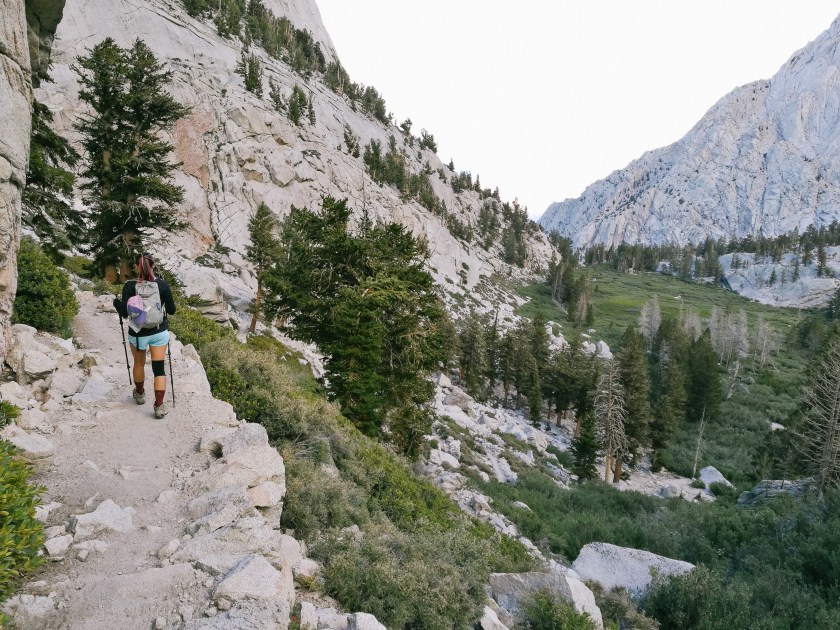
When you’re about to ascend the highest peak (14,505 feet, 4,421m) in the contiguous United States, it’s important to have a sturdy backpack with good frame support. However, such backpacks can cost hundreds of dollars. Instead of buying a new backpack, our friend Cindy repurposed one of her old daypacks. The DIY repurposed daypack worked perfectly on her 16-hour hike up Mt. Whitney and only cost her $8 extra dollars. Cindy was kind enough to share a step-by-step guide below.
Materials Needed
Body: ~3-year old REI 18-Liter Flash Pack (or any old pack)
Hip Belt: ~6-year old LL Bean 27-Liter Day Pack (or any removable hip belt)
Frame: 1/4 inch Aluminum Window Frame + Frame Connectors (bought at Home Depot)
Tools: 4 Velcro Strips + Metal Handsaw (bought at Home Depot)
Total Weight: 1.2lbs or 19.2 ounces (10 ounces from the body)
A Step-By-Step Guide With Photos
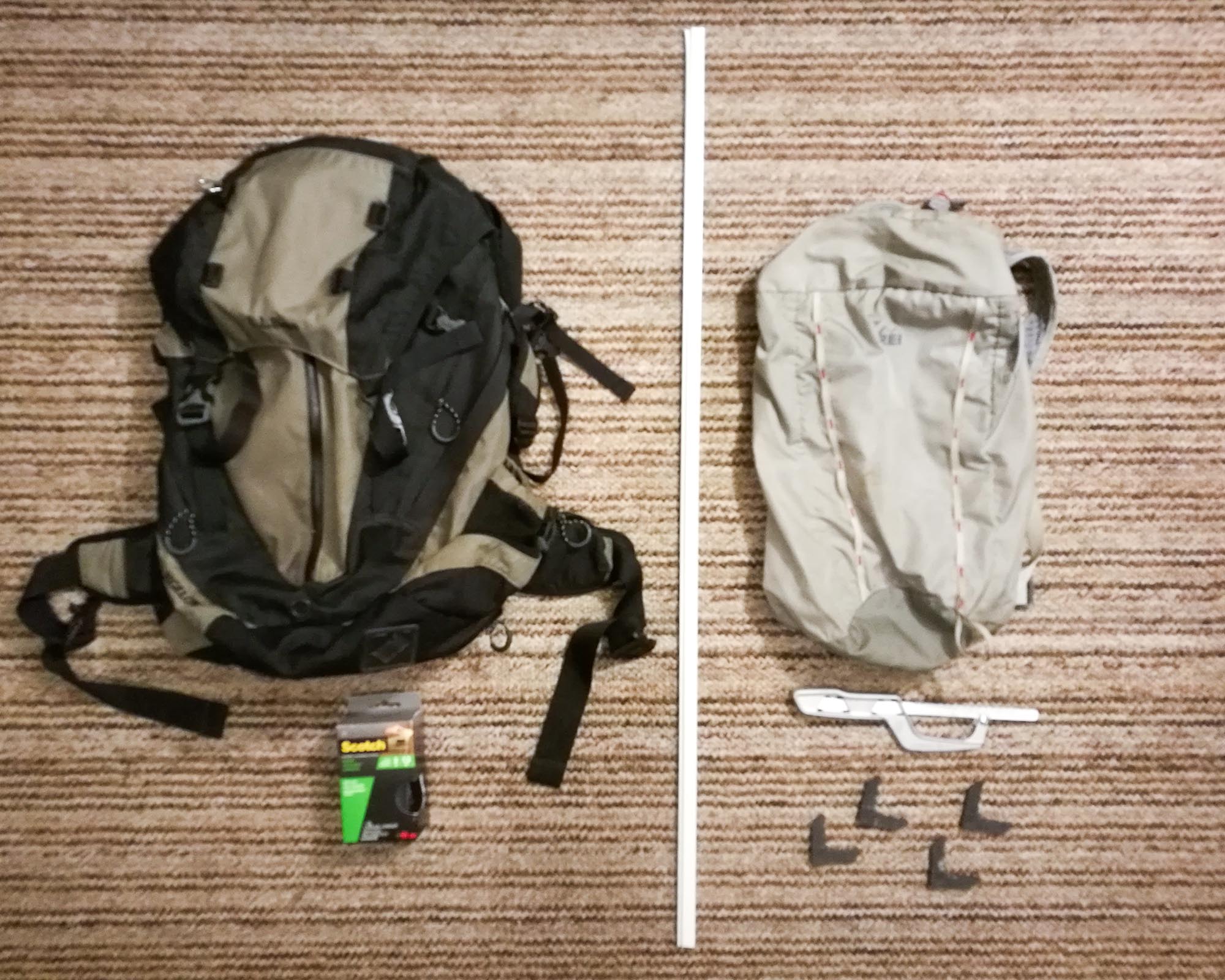
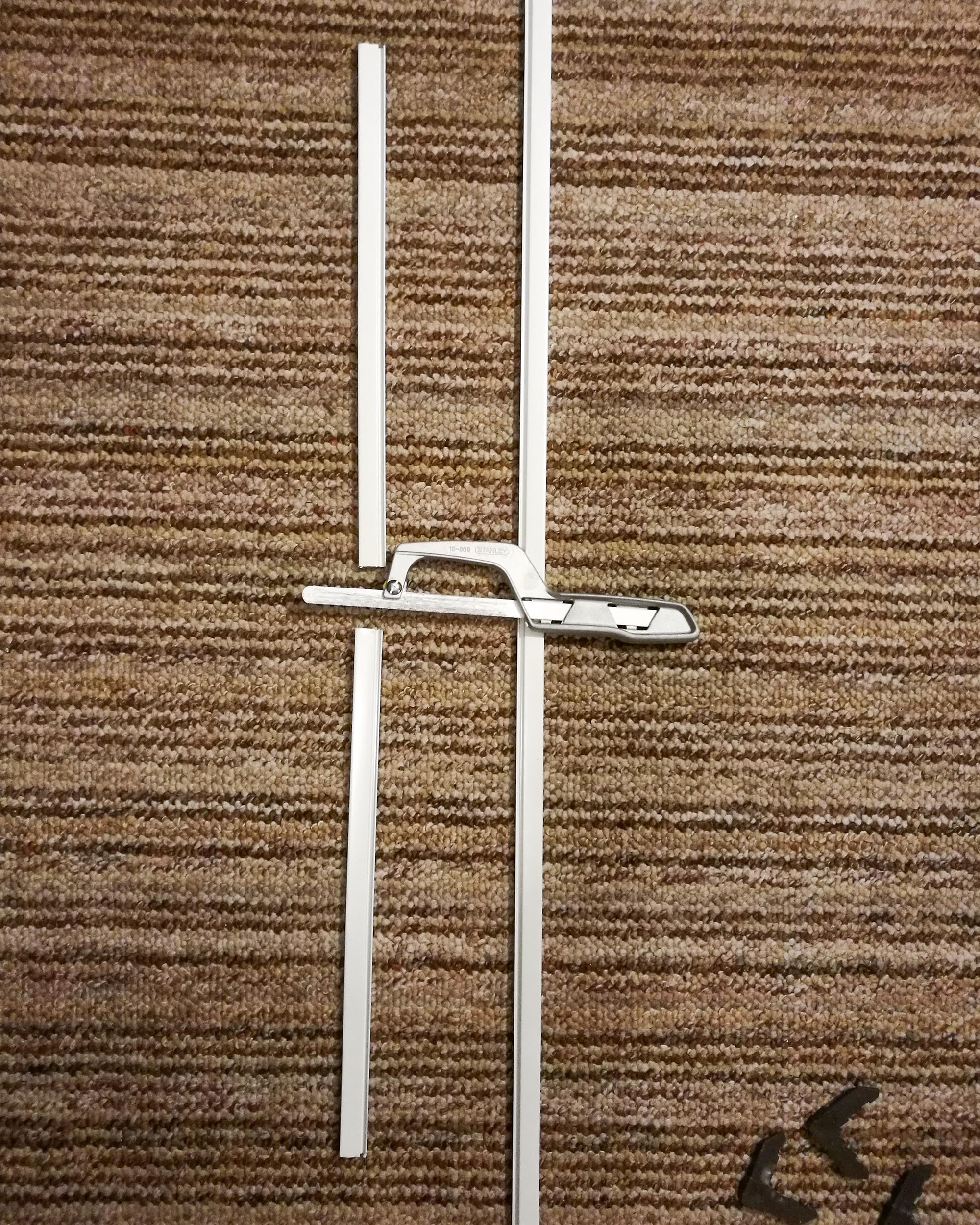
From left to right: LL Bean 27L Daypack for hip belt, a roll of velcro, frame, REI 18L Flash Pack, metal handsaw, and frame connectorsFrame with metal handsaw and connectors
Step 1: Cut the frame into four pieces, two for width and two for length. Subtract about an inch from the dimensions of your bag. We used the trial and error method.
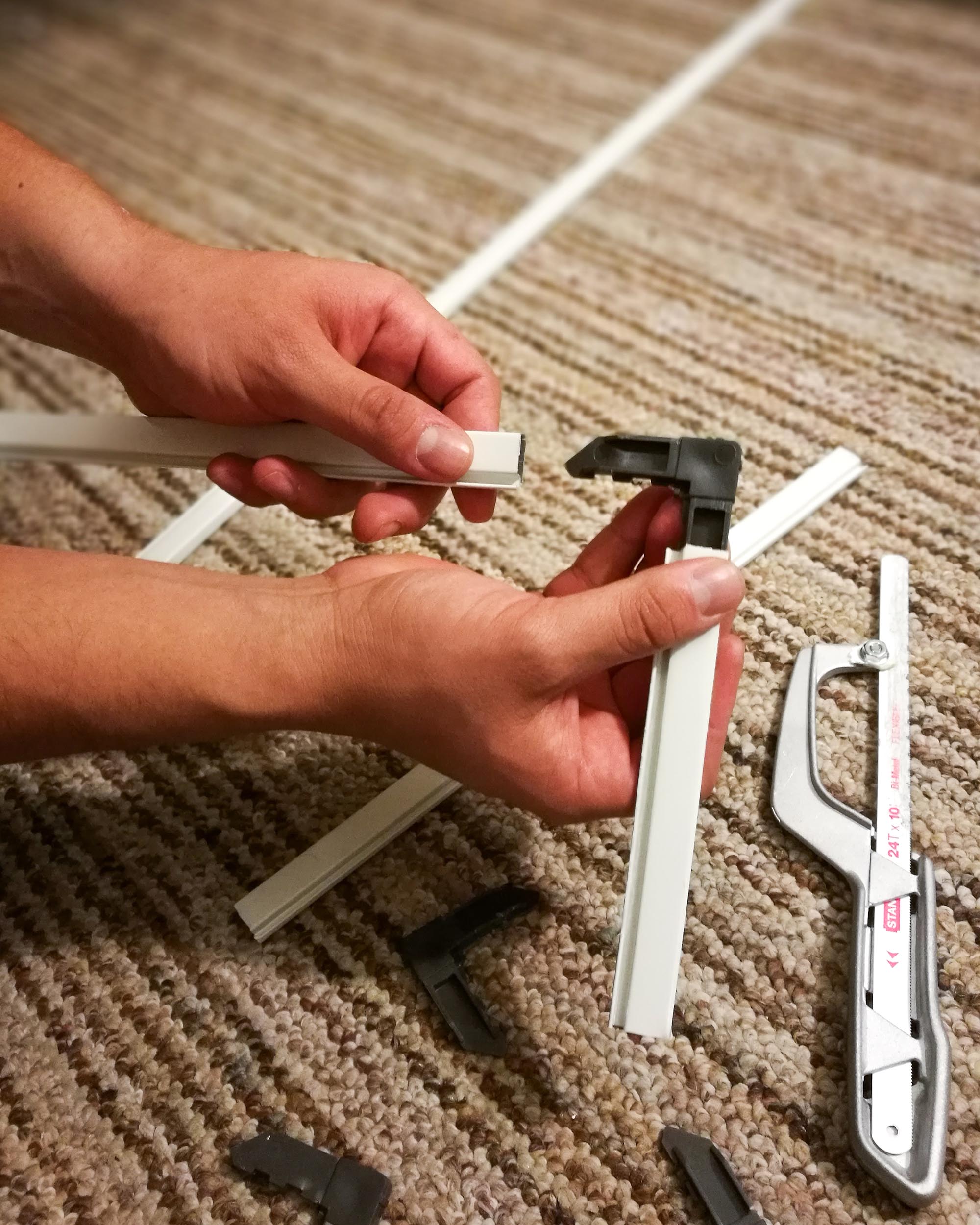
Step 2: Fit the connectors into the frame to form a square.
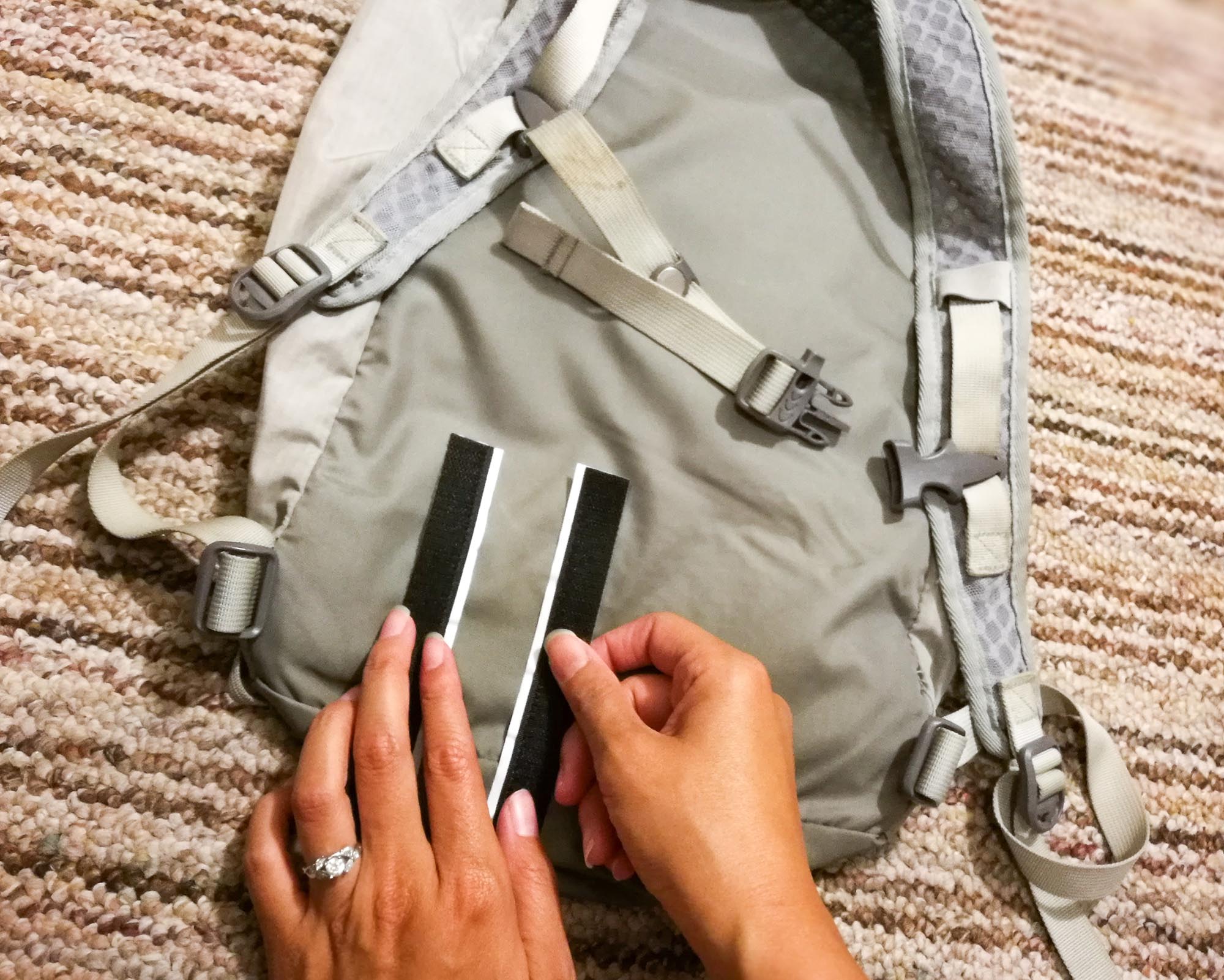
REI 18L Flash Pack with a velcro strip
Step 3: Cut four strips of velcro and position across the bottom of the body.
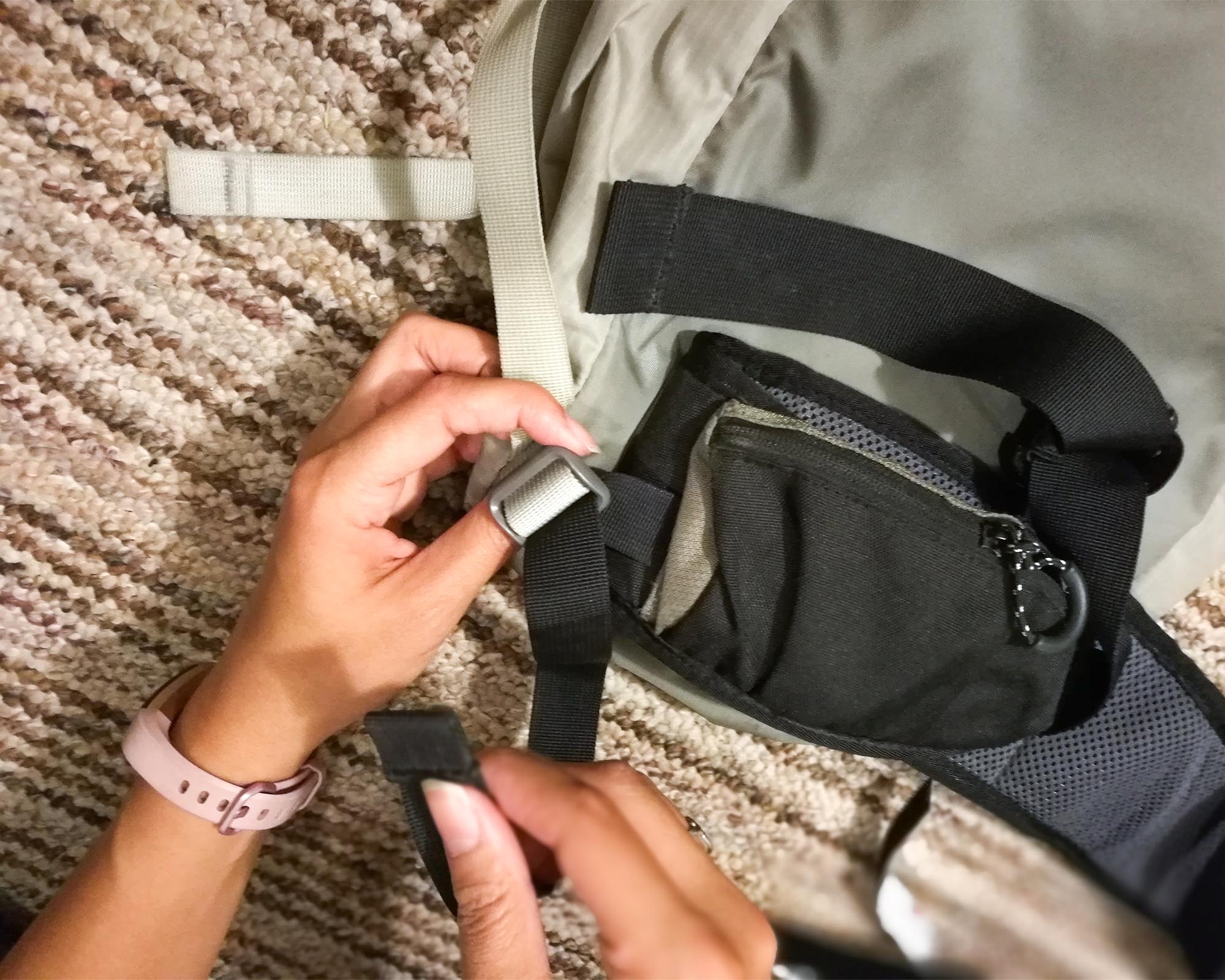
REI 18L Flash Pack with a hip belt from the LL Bean 27L Daypack
Step 4: Stick hip belt onto velcro and slide straps into the body’s hooks. Tip: Most backpacks’ hip belts already have velcro on them. We only needed the ‘prickly’ velcro strips for this.
The backside of the REI 18L Flash Pack with frame and hip belt
Step 5: It’s a good sign if your frame is smaller than your daypack. Before sticking it in the bag, make modifications here.
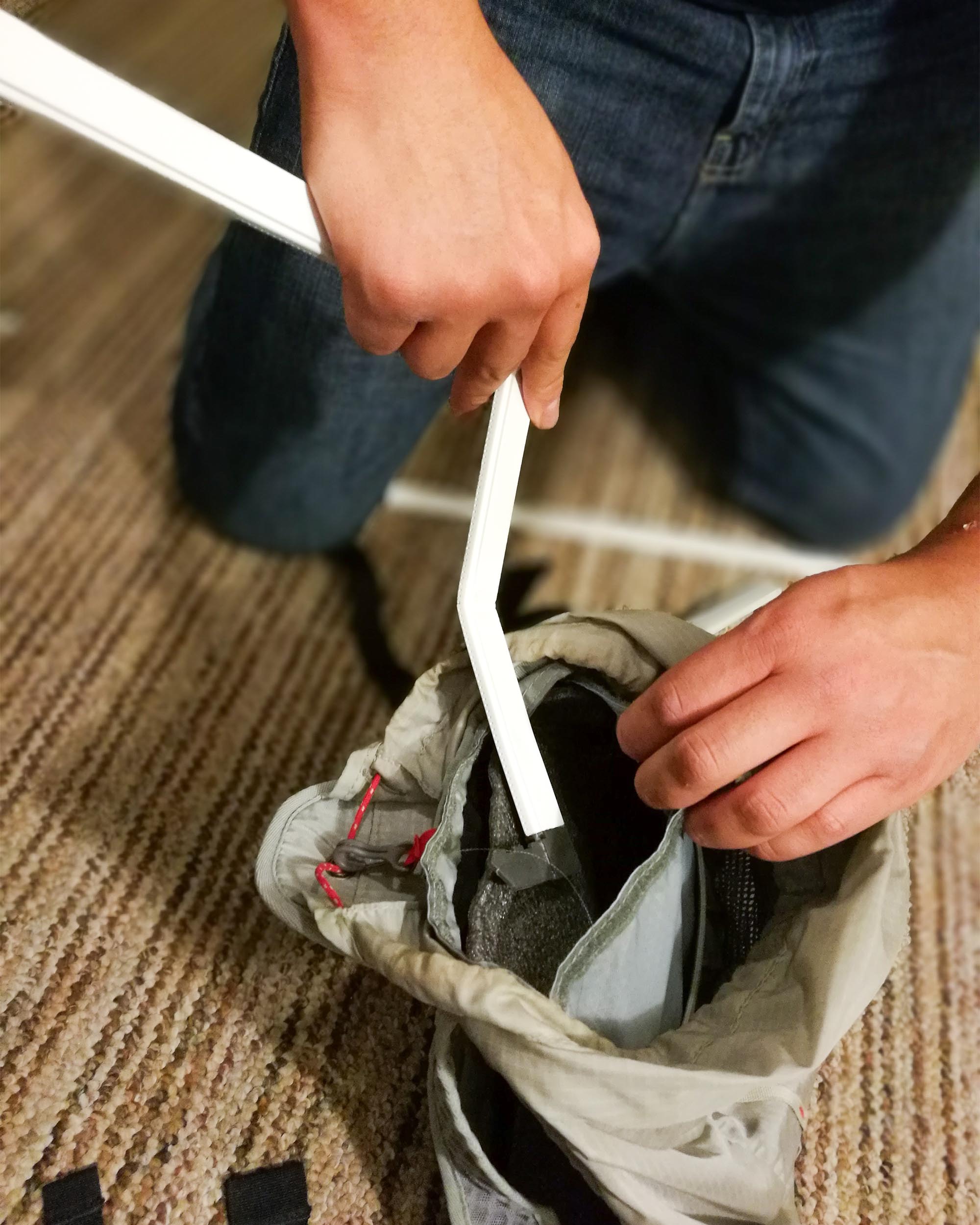
Step 6: The Flash Pack has a padded back that you can open. It’s a tight fit so we disassembled the frame to put it inside the pouch, then reassembled it inside the pack. Note: The padded back is NOT the bladder pouch.
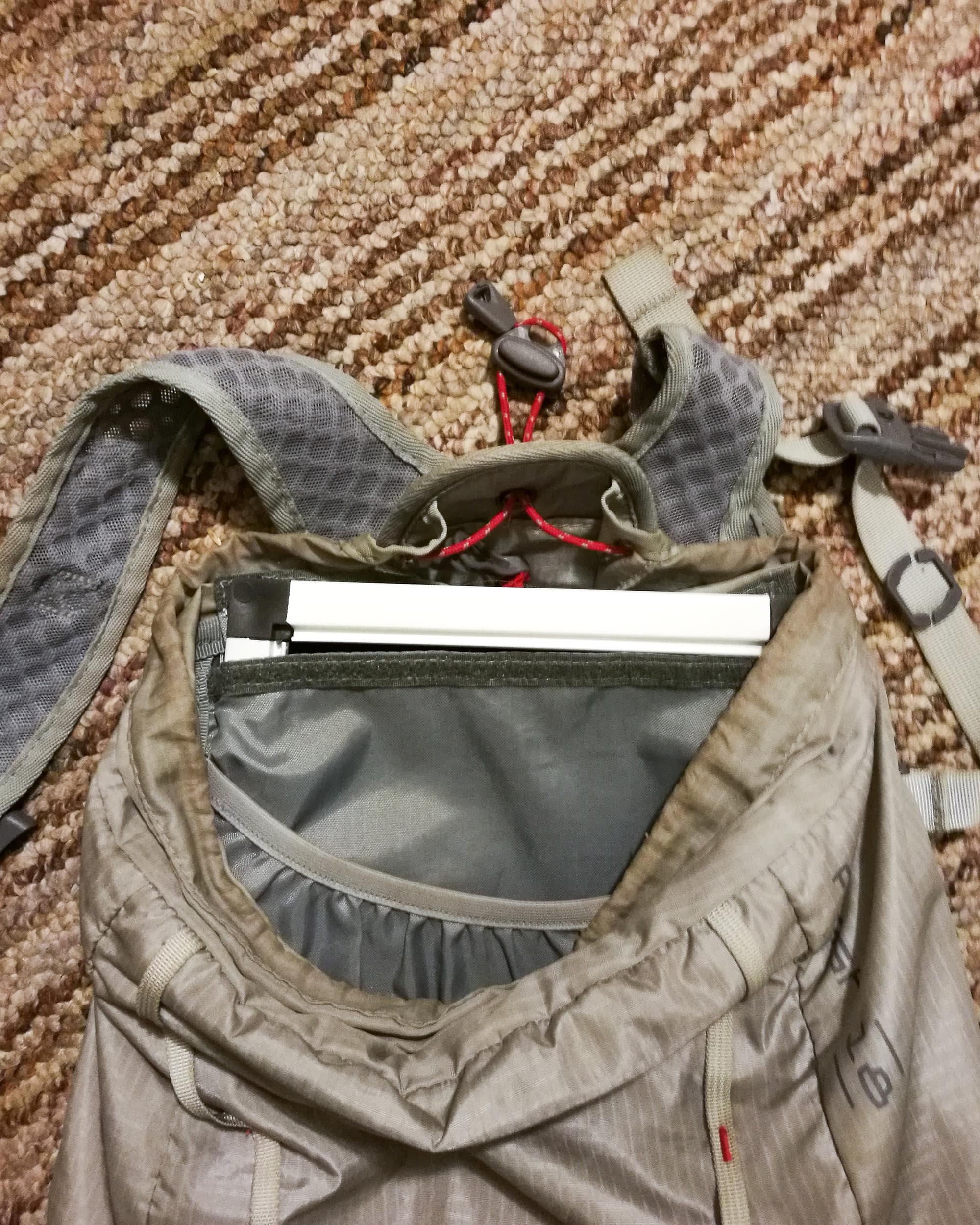
The frame inside the padded pouch of the REI 18L Flash Pack
Step 7: We probably could have shaved off another centimeter, but it is important that the frame itself has enough infrastructure to provide support. Otherwise, it’s just extra weight.
The final product! REI 18L Flash Pack with frame support and hip belt
In the end, Cindy’s makeshift repurposed daypack saved her money and showed us how easy it is to choose a sustainable alternative to buying a brand new and expensive backpack. In her Zero Hour Story interview, Cindy says, “One of the most impactful ways to be sustainable is to simply stop buying ‘stuff’ and repurpose things you already own.” We hope her story inspires you to be creative with what you already have.
Cheers, Jennifer and Vivian
*Photos and Step-By-Step Guide directions were provided by Cindy and Erick.
Born and raised in the San Francisco Bay Area, Cindy was surrounded by the outdoors. In college, she immersed herself in several environment-focused opportunities; volunteering with the local Waterkeeper, acting as Program Coordinator for Sustainable UCR, teaching science courses to elementary and special needs students, and most notably, co-founding the Campus Compost Initiative which introduced the three bin system in her university dining halls. Today, she helps companies secure environmental permits to operate their solid waste and recycling operations, and ensure their ongoing compliance with stringent water quality regulations.
What does ‘sustainability’ mean to you? I prefer sustainability not used as an adjective to describe a thing, product, activity, or a brand. Once you start labeling the word as a descriptor, it diminishes value and limits meaning. Sustainability is a type of lifestyle –– it can be incorporated in every aspect of your life.
What initially sparked your interest in the environment? Being outside with my family helped nurture my awareness and my AP Environmental Science class [in high school] moved me to pursue it as a career. In the class, one of our experiments involved four 2-L soda bottles that were separated into four different ecosystems –– aquatic, terrestrial, decomposition, and predator/prey zones. We were responsible for monitoring the zones to see who could keep it in balance and alive. It was amazing to see how the different components worked so effortlessly together! It blew my mind to think I created this little ecosystem inside these four 2-L soda bottles.
How did your AP Environmental Science class influence your career path? [In the class] we learned that certain ecosystems and biomes could only be found in certain parts of the world. I wanted to see them and I wanted to make sure others could too, but we can’t see them if they’re not protected. I initially applied to college as a Biomedical Engineer and after the class, quickly changed it to Environmental Sciences. I thought, “Nope, forget the human body. I’m more interested in the components of the Earth and how they work together.”
“I think one of the most impactful ways to be sustainable is to simply stop buying ‘stuff’ and repurpose things you already own. When I hiked Mt. Whitney last August, instead of buying an entirely new backpack, I decided to repurpose one of my old daypacks.”
Can you talk about a way you incorporate sustainability into your life? One of the things I do is grow my own plants and herbs. I live in a tiny apartment complex in Los Angeles with a small parking lot in the back. My fiance and I negotiated with our landlord to let us build a raised-bed garden in the lot. While it’s not always successful –– from six squash plants, I only got one. Ha! But my parsley and tomatoes are doing well! –– with time, anyone can do it. It’s hard, but you can start off with one planted pot. With homegrown plants, I don’t have to support large chain supermarkets that import food from far away and who knows how fair the labor and trade really is?
That’s awesome! Are there habits you have that you think others can incorporate in their own lives? I bring my own lunch to work. I’m saving money and eliminating waste that is associated with eating at a restaurant or eating take-out, like utensils, napkins, and containers. But bringing lunch every day can be sad, so I will still eat out sometimes. When I do, I’ll keep the containers and reuse them for something else; hold my lunch a couple more times or store my fruits and veggies in them.
What’s one advice you’d give to someone who is just starting to learn about sustainability? I think one of the most impactful ways to be sustainable is to simply stop buying ‘stuff’ and repurpose things you already own. When I hiked Mt. Whitney last August, I needed a daypack with a better frame for support. Instead of buying an entirely new backpack like the guy at REI and several hiking websites that told me I needed to do, I decided to repurpose one of my old daypacks. My fiance and I went to Home Depot and bought a $4 metal window frame and $4 connectors. We cut it into a square and stuffed the frame inside the back of my crummy one-pouch daypack to create a support for my back. Then I took a hip strap from another backpack I already owned and velcroed that to the outside of the daypack. It worked perfectly on the hike. I saved money and reduced waste by not purchasing a new backpack. Plus, I really did not want to carry any more weight on what turned out to be a 16-hour day hike!
“If you want to help the environment, you have to aim for the idea that your actions will make other people act too.”
What keeps you motivated to keep fighting for the environment? It’s the same reason why I’m working in the environmental field –– if I’m not advocating for something I believe in, then who will? How can I expect anyone else to do it if I don’t do it? If I can show just how easy it is to be a little bit more sustainable or inspire someone else with my choices [living my lifestyle], hopefully, it can inspire another person and it becomes a chain reaction.
What would you tell someone who doesn’t care to make a conscious effort? If they won’t do it for themselves or their belief in environmental protection, then do it for someone that it does matter to –– your close friends, family, or strangers. Even if you or your friends don’t plan on having children, other people’s children deserve to experience the world the same way we do … maybe with fewer fires and hurricanes, but you know what I mean.
What can you tell someone who believes they can’t make a difference? Tell that to Rosa Parks or Martin Luther King Jr. Tell that to all these advocates that fought for something they believed in. Granted they fought for different issues, but these are prime examples where one person made a difference. We’re advocating for the environment. If we want to put this in real life situations, think about the ban on plastic bags. That was a collective effort that took years of individuals coming together. People started bringing reusable bags to stores and educating themselves on waste. We came together and were able to change legislation. If you want to help the environment, you have to aim for the idea that your actions will make other people act too. It will create a chain reaction, then soon enough you have a group of people willing to organize and fight for something. If you don’t think you can make a difference on your own, go join a group! There are plenty that need YOU!
Any last words? Below are some groups that are always in need of volunteers, especially at beach and river cleanups which are held throughout the year:
We think a lot of our outdoor friends can agree: outdoor gear and clothing are (so dang) expensive. It took us a few years to accumulate what we have and we still don’t have everything we need, but that’s okay. To score a good deal, we try to stay patient and not get discouraged.
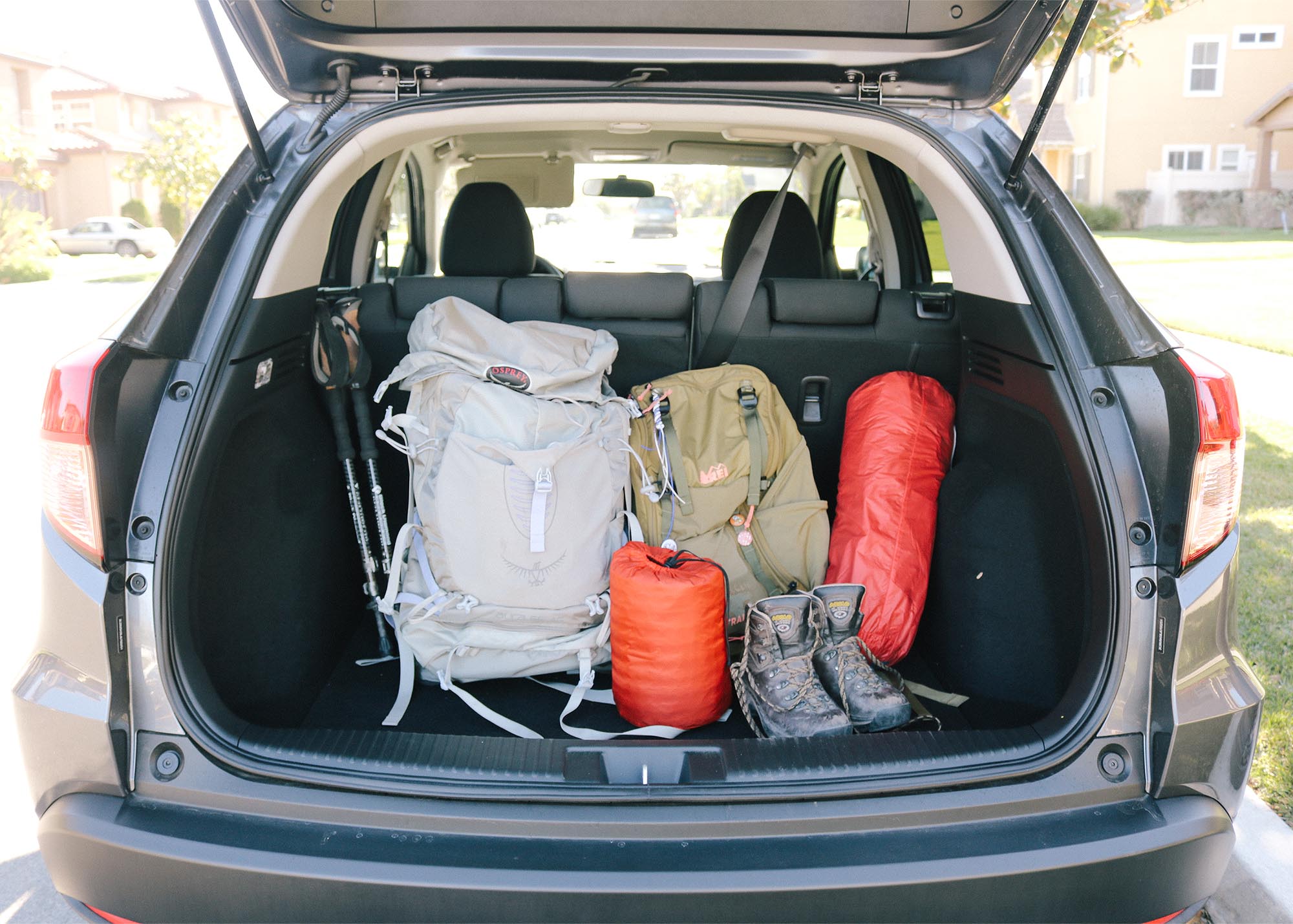
A tip for getting started: buy the essentials first –– boots, sleeping bag, sleeping pad, tent, and backpack. Then shop for everything else over the years with the tips we provided below.
Wait for Sales and Buy Off-Season. Most outdoor brands will have sales during the off-season or holidays. Stock up on winter gear during the springtime or spring gear during the fall. Note: If you are an REI Member, every May, REI has a big Anniversary Sale and members will receive 20% coupons to be used at REI and REI Garage. The sale is great even without the 20% coupons. Last year Vivian bought a pair of hiking boots, a backpacking tent, and a new daypack and saved over $300.
Know Where to Shop Online. If you don’t mind checking every day, REI Garage has daily deals and discounts on outdoor clothing and gear. There’s also Worn Wear, a site managed by Patagonia to sell used Patagonia clothing and gear. REI has also launched a similar program, REI Used Gear, where they sell gently used gear returned by customers. Sometimes the Nordstrom company, Hautelook, will sell discounted outdoor clothing and shoes. We’ve seen brands like North Face and Tevas pop up on there. Backcountry and Moosejaw are online shops worth checking out for discounted clothing and gear.
Shop at Online and Onsite Outlets. Columbia, North Face, and Patagonia all have great marked-down prices at their outlet stores or online website. For climbing shoes, a few we’ve found in Southern California are Evolv in Buena Park, Gear Coop in Costa Mesa, and Mad Rock in Santa Fe Springs. We got a pair of climbing shoes for really cheap (like a pair of Pink Anasazi Lace-Ups for $30 kind of cheap) at the Five Ten Outlet in Redlands, whom sadly just moved to Germany. They are planning to open a location in Portland if you ever find yourself out there.
Explore Mountain Town Thrift Stores. If you live near an outdoor community, a national park, a ski resort, or a tourist town, try to find some time to check out nearby thrift stores. You can find functional and quality outdoor gear at great discounts. Of course equipment depends on the area, but if you’re patient, you can find great deals on hidden gems such as winter equipment, fishing poles, life jackets, tents, sleeping bags, and tons of outdoor clothing.
Become an REI Member. Because why not? REI Members receive 10% back on purchases for regular-priced items. These are turned into dividends and are given back to members every March. You can also apply for the REI Co-Op Mastercard and receive 5% back on items bought at REI and 1% back on everything else. Note: A lifetime membership at REI is only $20.
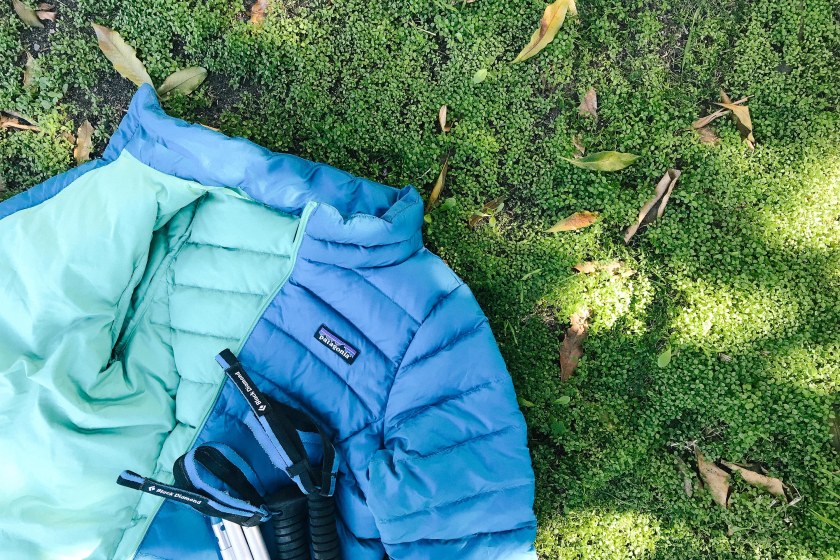
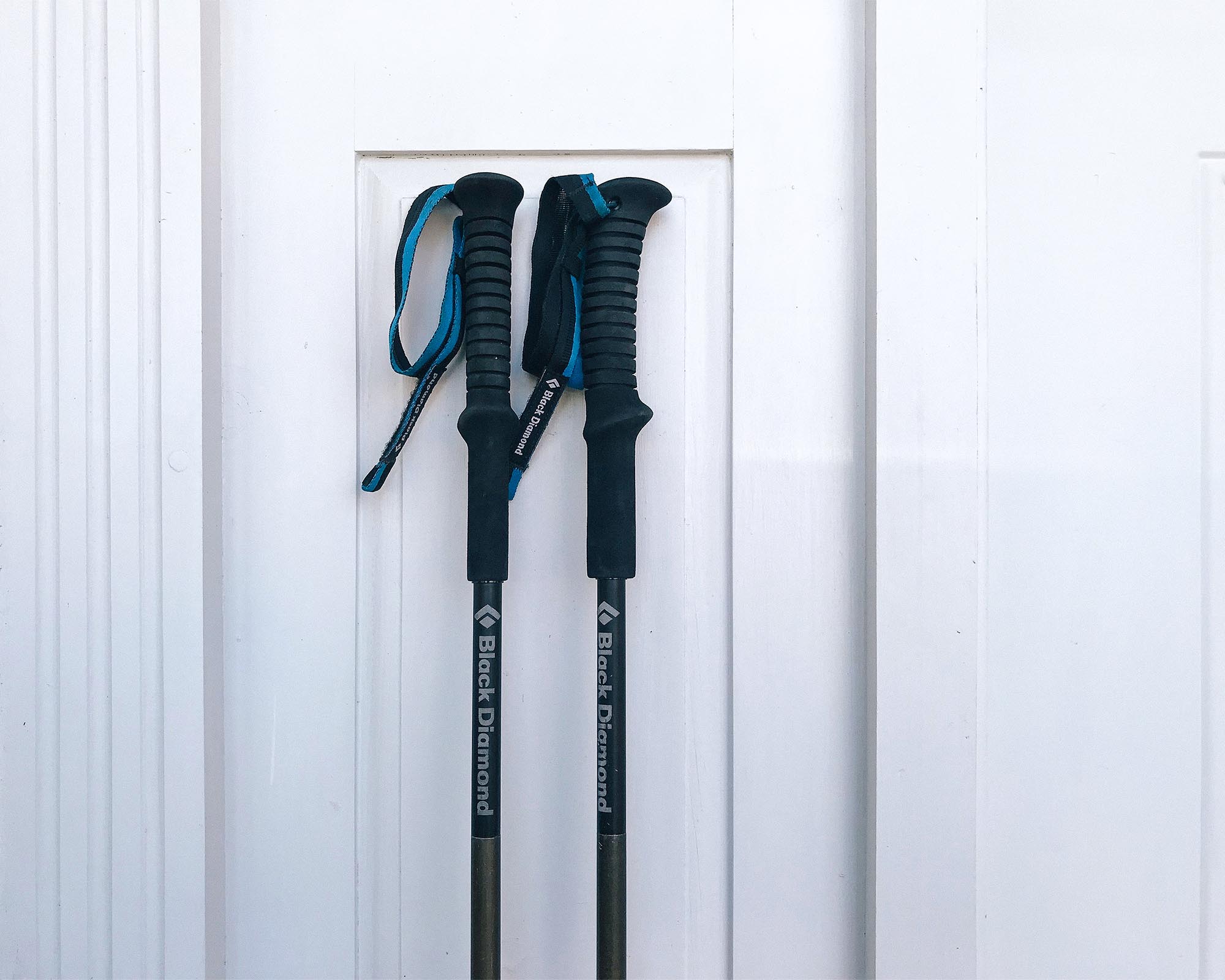
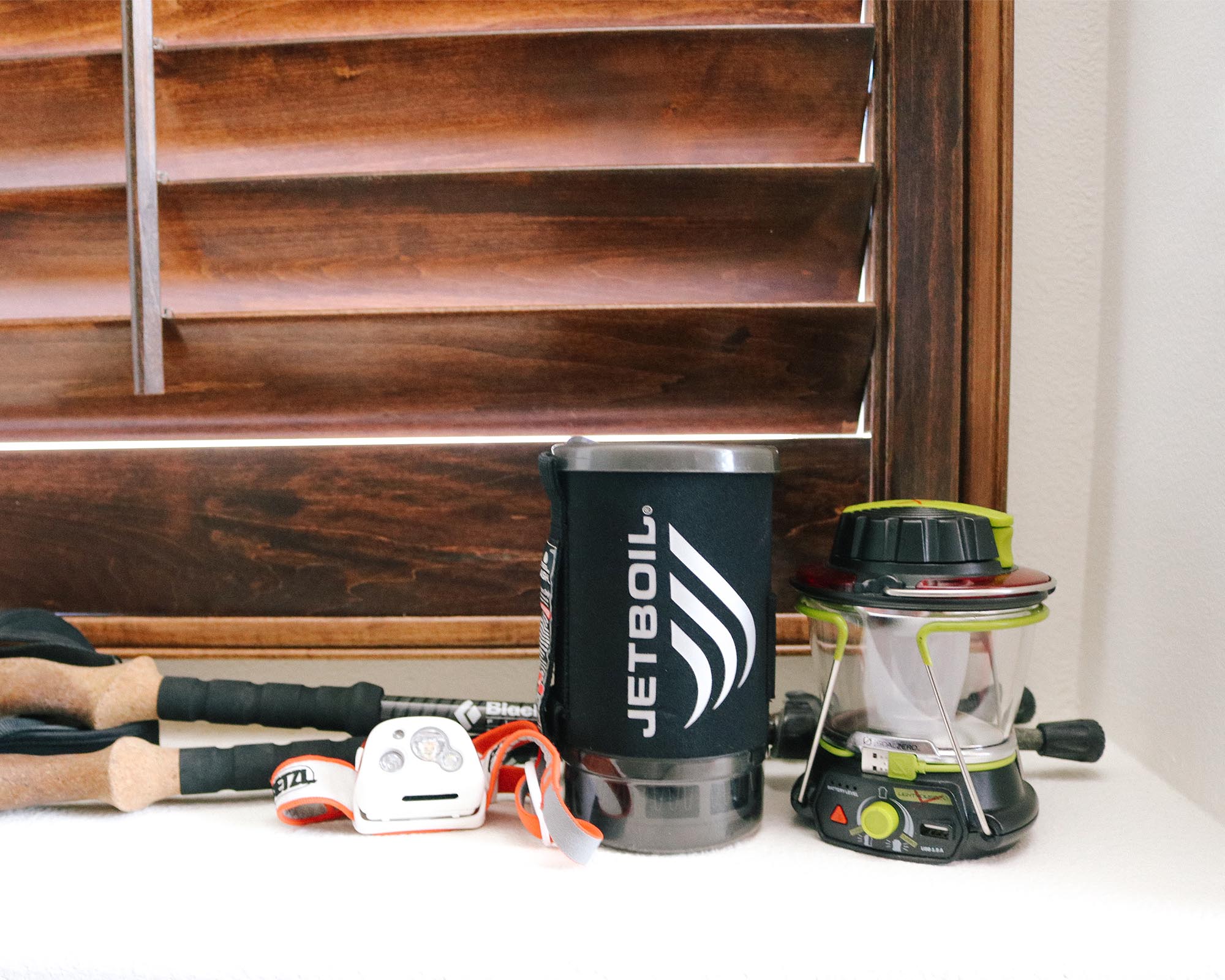
Attend the REI Used Gear Sale (onsite). Every quarter when customers return gently used gear, REI will mark the price down, then host a used gear sale on location. The items available depends on the specific location and what customers return, so finding exactly what you need can be tough, but it’s definitely worth it to go scout. Once, Jennifer found brand new Black Diamond trekking poles for 50% off the original price. Vivian has been a couple more times and was able to score a lot of cool items like Black Diamond trekking poles, a Jetboil Flash Cooking System, a Goal Zero lantern, and a Petzl Reactik+ Headlamp, all for over 50% off. Our friends have gotten headlamps, climbing shoes, and backpacks here too! Note: The event is only opened to REI members.
Share What You Have. Find more outdoorsy friends (haha). Besides the essentials and individual items, you can share most supplies with a variety of friends that already have them (until you can get your own). Things like a tent, portable stove, lantern, cookware, water filters can all be shared! Plus, it keeps us living with less stuff.
A last note on outdoor gear: don’t worry too much about the brand. Your friend may think a $1,000 Arc’teryx jacket (nothing against Arc’teryx, it’s a great brand) is the best you can get, but if it doesn’t work for you, it doesn’t work for you. You can buy $200 hiking boots only to realize the $70 dollar boot fits and functions better for your feet. It’s not always about having the most top notch gear. Our personal suggestion is to find what is most comfortable for you and know how to use each gear correctly depending on the terrain you’ll be in. This isn’t to say that you should skimp on gear that can potentially save your life; these are things like helmets, harnesses, ATC, crampons! Do your research and spend more when you need to. Affordable or expensive, if you take care of your items, in return they will last you a lifetime.
Stephanie works in the event planning industry where she coordinates conferences for scientists and on occasions, weddings. She’s currently applying for a master’s program in higher education and student affairs, with a goal to create events at the university level. She loves to travel and is eager to plan her next big trip (most likely to Asia!). She considers herself to be a dog whisperer and loves late night talk shows. During her free time, she enjoys going to concerts and musicals but also staying active through volleyball and hot yoga.
What does ‘sustainability’ mean to you? It’s one part ‘awareness’ and one part ‘action.’ You can’t have one without the other. In my life, it’s living in such a way where my impact isn’t harmful to future generations, whether it’s the effects on people or the environment. It’s about being aware of what I consume.
When did you become aware of the impact of your consumption? It has always been in the background of how I wanted to live. I am a product of secondhand shopping, something I was exposed to as a young child, so that shows up in how I shop and why I enjoy thrifting. Thrifting has always been really neat to me; I love to do it, but I didn’t begin to take more action until recently.
We love that thrifting is a great alternative to fast fashion. Do you thrift for sustainable reasons? Growing up, my family didn’t thrift for sustainability purposes, we were just trying to survive. We had all our basic needs, but if I wanted a little something extra and I knew I could find it for 75% off at a thrift store, then sweet. Now, as a young adult, I thrift for both financial and sustainability reasons. My purchases are made with the mindset that I will wear an item for the rest of my life, or until it reaches the end of its life cycle…or I no longer fit it. It has also helped me revolutionize my style.
You lived in Brazil for a few months, how did the experience help spark your awareness and action? My trip to Brazil from June to November 2016 was to help raise awareness on modern day slavery. Our main focus was on victims and survivors of sex trafficking, but I also knew a large component of human trafficking involved labor. This experience impacted my mind and my actions; I became more aware of what I was purchasing, who it came from, where it came from, and through what means. I never saw anything first hand, but with the things I heard in the community or learned in seminars about slave labor, I didn’t want my purchases to contribute to that.
“Holding value in my material possessions felt like I needed those things to give my life more value. I am now living in a way that feels a lot fuller, even with lesser.”
How have you carried that experience into your personal life today? When I left for Brazil, all I had was one large suitcase for five months, and even that ended up being plenty for me. I realized I didn’t need multiple jeans or sweaters to live comfortably. When I came home, I purged a lot of things I didn’t need; additionally, I no longer felt compelled to hold onto a lot of things anymore. Holding value in my material possessions felt like I needed those things to give my life more value. I am now living in a way that feels a lot fuller, even with less.
Wow, it seems the experience really changed your thinking on material perspective. I grew up in a household where I had food every day, I received public education, I had clothes on my back. It puts things into perspective –– the things I have versus the things I can release from my life.
You’re also a huge advocate for menstrual cups, can you tell us more about that? In college I had a fascination with menstrual cups. They’re so nice because they’re less wasteful; pads and tampons were just so extra. It wasn’t until my trip to Brazil when I realized I couldn’t pack enough pads and tampons for five months. It just took up too much room. My friend introduced me to the DivaCup, and I thought, “Okay, let’s give this a try.” It was a rough start for me because I was scared; the DivaCup was much bigger and harder than my Lunette (something I’m using right now), and although it worked, it never felt completely comfortable. So after that, I did a lot more research by comparing other menstrual cups and eventually went with the Lunette. TheLunetteis softer and smaller and more manageable. I was able to fiddle with it and shape it for my body.
What’s a misconception people have with menstrual cups you want to clarify? (1) Some don’t think it’ll fit, but it definitely gets in there pretty comfortably — I don’t even notice it. Every brand will show you techniques on how to fold it. Plus, when you’re on your period, things are more lubricated so it’s not as painful to push in. (2) Others think, “I bleed a lot. How will this work for 12 hours?” Everyone thinks they bleed more than they actually do. The way pads and tampons are designed, it spills on the surface and looks like a lot. On a normal day, I’ll change it once in the morning and once at night. On a heavy day, I’ll change it one extra time in the middle of the day.
Menstrual cups help you learn about and know your body better. It’s a game changer. You feel more confident because you don’t feel anything and periods are no longer a burden. It’s also a more sustainable approach to our menstrual cycle.
Do you now make most purchases with the purpose of sustainability in mind? Recently, I’ve been shopping online more, and I’ve taken it upon myself to read the sustainability section on companies’ websites to learn about their practices. I’m more likely to buy from companies who are transparent about it. If I don’t find it, I probably won’t.
“I think about future generations a lot. Even if the world doesn’t come to the end in my or my child’s lifetime, I would still like it to exist for whoever is going to be living on it.”
Are you hopeful about the future and a more sustainable world? I am. I know sometimes it feels like there is a “losing side,” but I know people who care will continue to fight harder. If it matters, you’ll do something about it. What you are passionate about, even when others don’t agree — I think people will appreciate that, and they’ll try to lend an ear. I believe in intimate impacts amongst your friends; my friend helped me start using the Lunette, and Tinycaravan made me more aware of To-Go Ware and not using plastic utensils. I’m a believer that in our own ways, although minor, it’ll make things better. Everything counts.
What would you say to someone who is not? It all comes back to awareness and what I value. If people don’t think what I do will make an impact, I won’t force my ideology on anyone; but if I feel good at the end of the day about my impact and purchases, I’ll gladly do it over and over again.
Any last words? I think about future generations a lot. Whether I have children or not, I know someone who will have children –– my friends have children –– and even if the world doesn’t come to the end in my or my child’s lifetime, I would still like it to exist for whoever is going to be living on it.
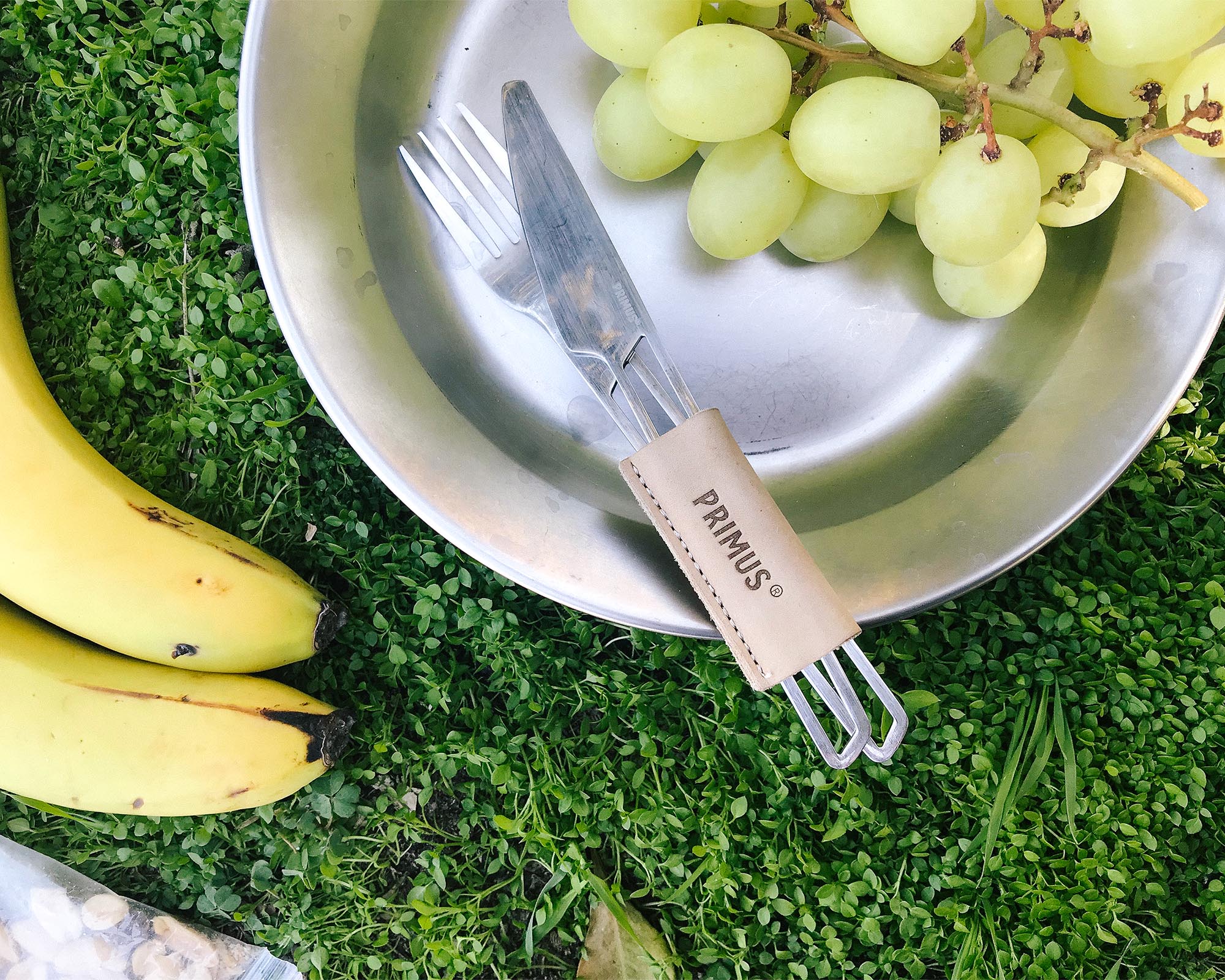
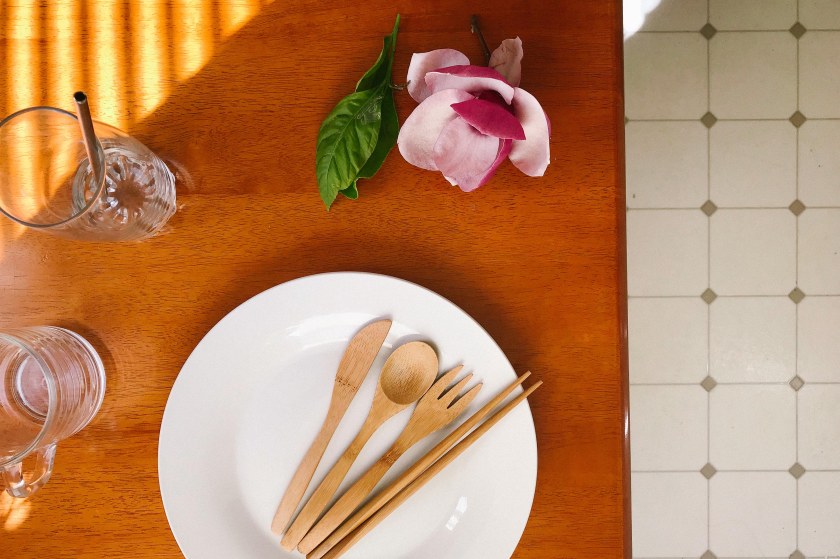
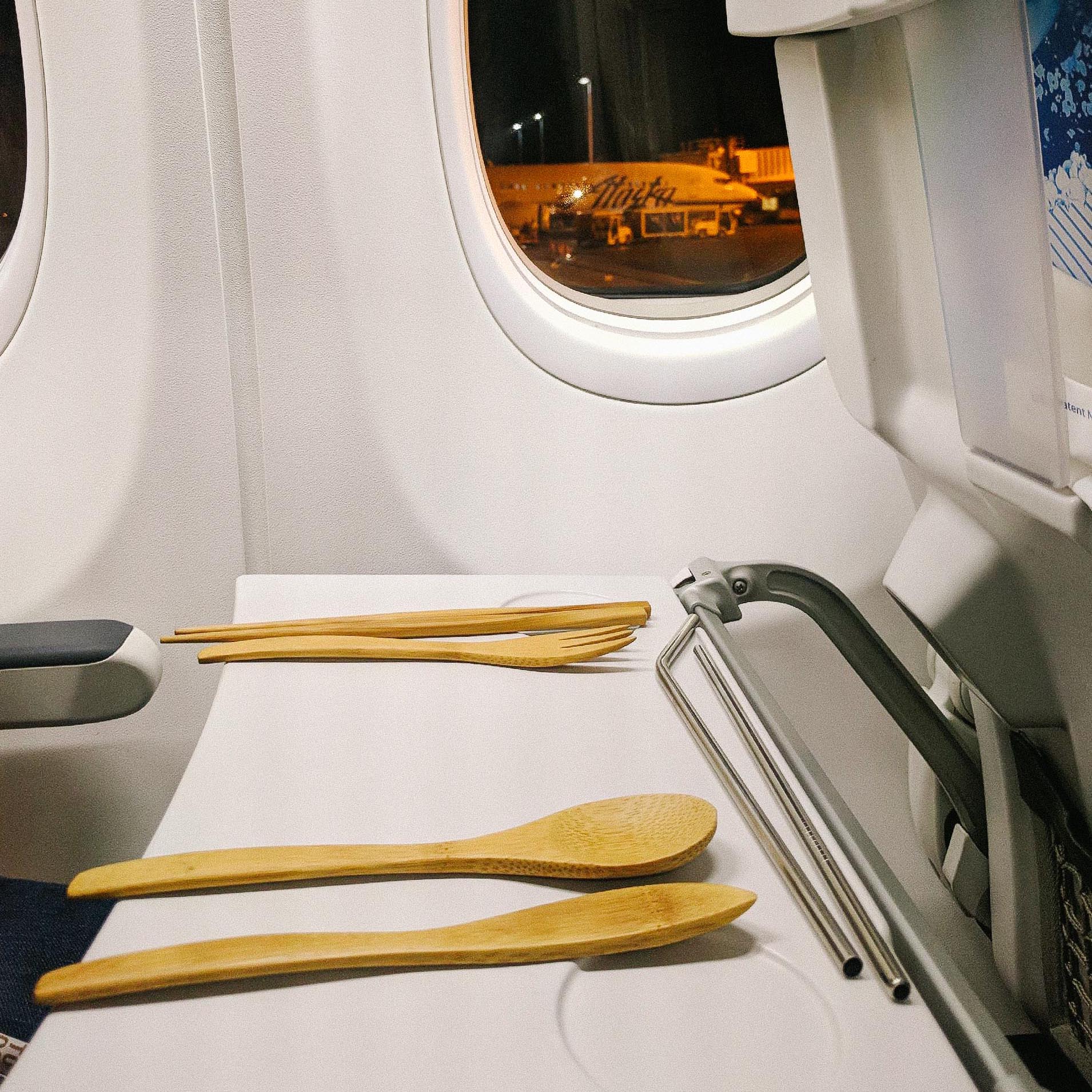
A simple and hassle-free way to incorporate a sustainable practice in your life is to carry along a set of reusable utensils when dining out. It’s a wonderful way to reduce your impact and your waste. If you’ve been following Tinycaravan, you may have noticed our To-Go Ware utensils, a set of reusable utensils made from compostable bamboo. We like them because they’re portable, lightweight, and come with a small pouch that can easily fit in our tote bags, book bags, or fanny packs. There’s also extra room in the pouch to slip in our metal straws.
A lot of our friends pack their own utensils from home too. You can keep your utensils clean and ready to go in a carrier like this or any pouch you already have at home.
To inspire you on your next outing, we’re revealing a few places we have taken our reusable utensils.
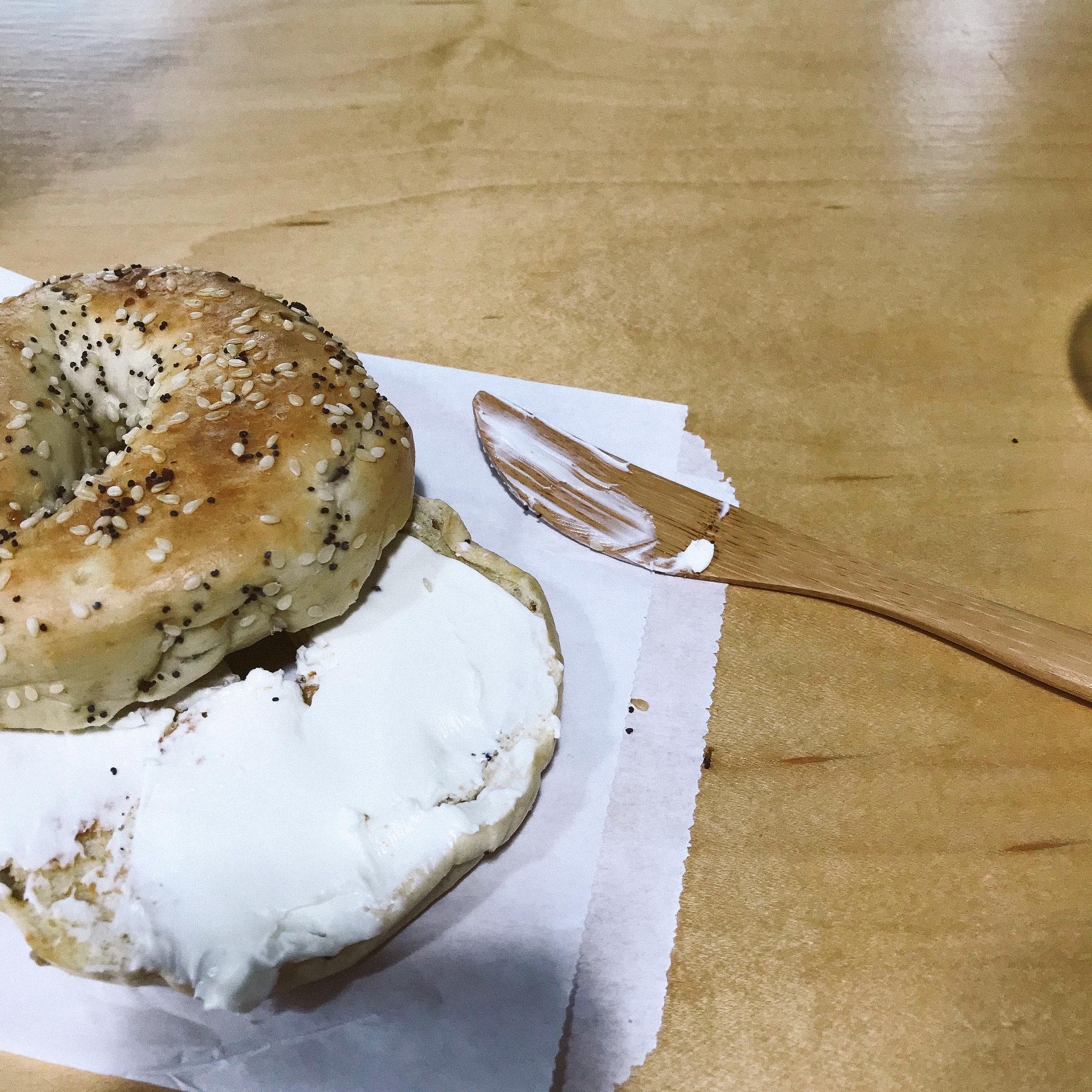
Coffee Shop. Great for quick snack stops. Instead of a plastic knife, we used our reusable knife to spread cream cheese on a bagel. Not pictured here, but we also brought our reusable water bottle to fill up with coffee and tea.
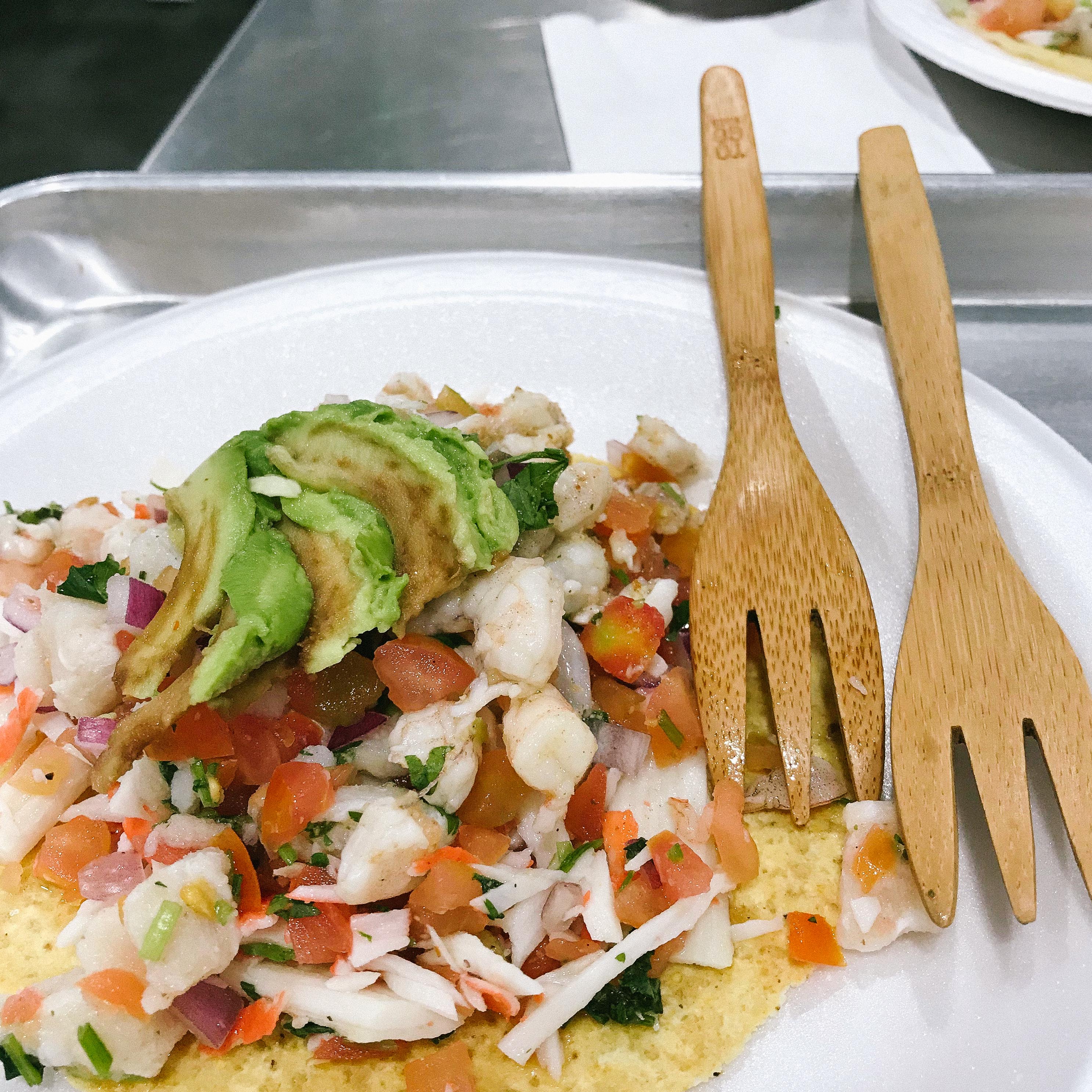
Taco Shop or Food Truck. While we wish we could have done without the styrofoam, we’re glad to have used our reusable forks here. For us, living more sustainably is not about being perfect, but looking for ways to limit our impact when we can. Next time, we want to ask the chefs to place our food in our own glass or stainless steel container. Some restaurants may say “no” due to health reasons, but it won’t hurt to ask.
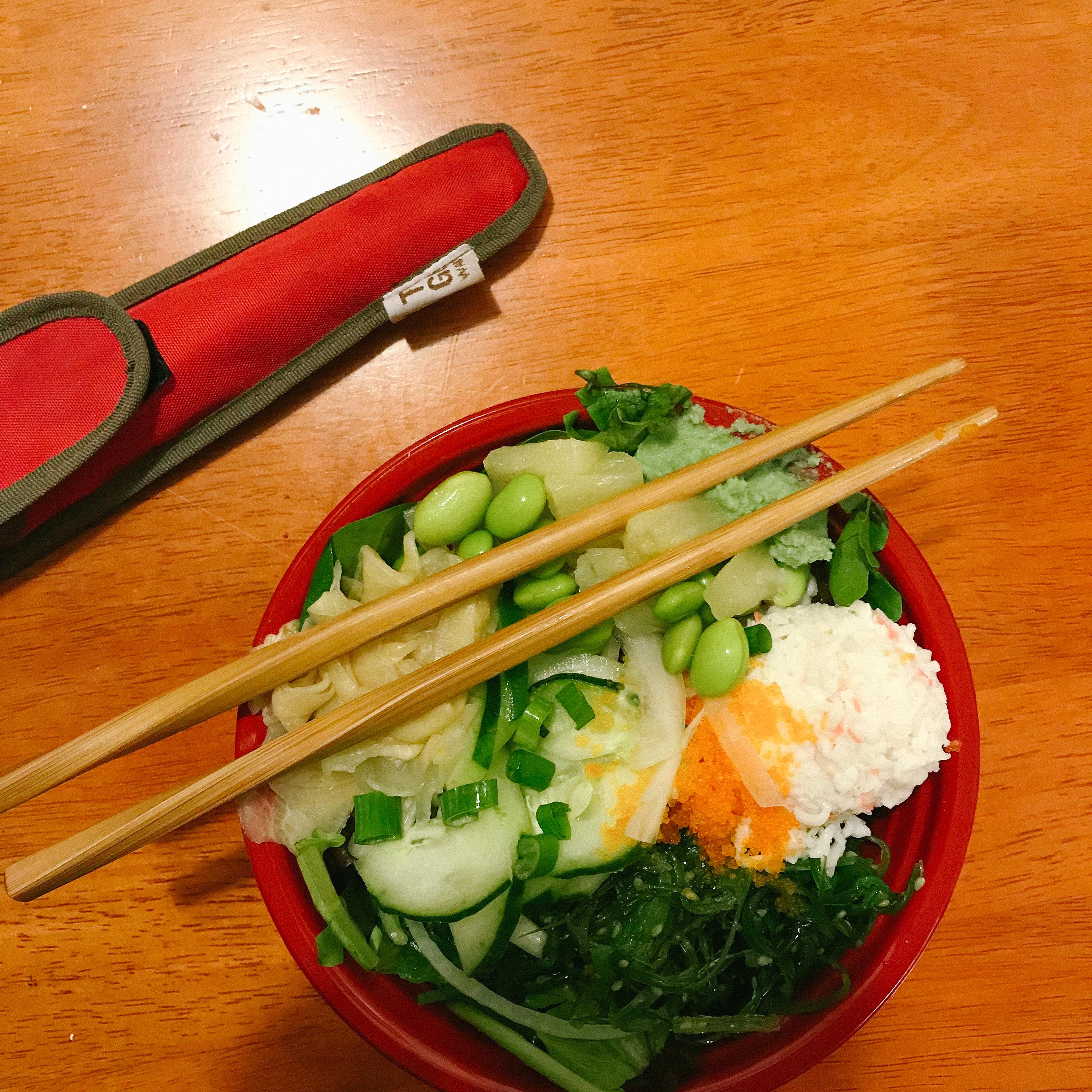
Most Restaurants. We have utilized our reusable utensils at many fast food and take-out restaurants who only offer one-time use utensils. Here, we opt to use our reusable chopsticks in place of disposable ones. We’ve also used our chopsticks at many Japanese, Thai, and Vietnamese restaurants too.
Ice Cream Shop. Utensils perfect for dessert! The cashier took notice of our reusable spoon and said, “You brought your own spoon? That’s so cool. I should do that too.” Moments like these remind us small actions can make big impacts. By choosing to carry our own utensil we can inspire someone else along the way to do the same. It’s cool and humbling.
Flights. We travel often and it was nice to know these are TSA compliant. This was taken on a recent trip to Seattle, Washington. The reusable utensils were lightweight and small enough to slip into our carry-on without much hassle.
There you have it. You can carry and use a set of reusable utensil anywhere. Though a small action, it is a stance against plastic –– and a great conversation starter. At first, we were shy to use them in public, but through our personal experiences, we’ve received mostly positive reactions. Strangers have asked us about them and coworkers have been inspired to carry their own sets. Our friends have also taken notice and done the same. It’s amazing to know how influential a small lifestyle change can be. Think of all the plastic we can all say “no” to in a day, a week, a month, and even a year!
Do you bring your own set of reusable utensils with you when dining out? Has anyone asked about them?
Emily is a second year Ph.D. student at the University of Michigan studying atmospheric science. Her research involves quantifying carbon dioxide emissions from urban regions, with a focus on the Middle East, using both satellite data and models.
What does ‘sustainability’ mean to you? Sustainability refers to practices we can continue to do to maintain the Earth and the environment over a long period of time –– all in a manner that keeps the air and the water clean, doesn’t cause unmitigable climate change, and doesn’t harm the poor or people of color around the world.
Why do you think it’s important to implement sustainable practices? I know this gets said a lot, but I do think it’s a moral thing. We can all do whatever we like and it may not necessarily hurt our generation, but it will hurt the generations that come after us, as well as the many other species that inhabit our planet. Sustainable practices will enable us to have the quality of life we have right now, for the generations after us –– and for all the cute animals.
How do you personally incorporate sustainability into your life? There are a bunch of ways I try and incorporate sustainability into my life. I try not to buy a lot of stuff. Consumerism, in general, is terrible for the environment, and in my opinion, it is better to not buy something than to buy something and reuse or recycle it. When I’m out, I like to carry a stainless steel water bottle and my utensil kit. This keeps me from having to use plastic water bottles or disposable utensils. The less we buy, the less we waste.
Additionally, I’ll turn off the lights when I’m not using them. I also try and save energy by using LED light bulbs. I’m not as good about taking short showers, but in my head, I would like to take shorter showers. I try to eat less meat when I can –– but sometimes that can be hard. In the warmer months, I’ll hang dry my clothes.
“As far as we know, Earth is the only place in this very large universe that possibly holds complicated life, and we should do what we can to sustain this precious and unique life.”
What initially sparked your interest in protecting the environment? How did that contribute to your current career path? In my junior year of high school, my AP Physics teacher gave our class excerpts to read from a book called Rare Earth. The readings focused on how unlikely there is to be multicellular, complicated life in the universe. The book detailed very specific things that have allowed for life like ours to develop in the way that it has. For example, if you look at other planets in the solar system, the moon is tiny compared to the mass of their planet. But our moon is 1/3 of the mass of the Earth, which is not common at all. This balance has helped stabilize the rotation of the Earth and the seasons that helped life develop. I was really fascinated by that idea and thought, “Wow, the Earth is really special.” As far as we know, Earth is the only place in this very large universe that possibly holds complicated life, and we should do what we can to sustain this precious and unique life.
You studied in Germany for some time. How did the experience change your perspective and views on sustainability, especially when compared to America? It was very obvious that in Germany they incorporate sustainable practices in a lot more ways than here [America]. I learned to hang dry clothes when I was there. Everything is also smaller in Germany, and it made me think about how wasteful the lifestyle in America is. If you go to Germany and other countries in Europe, all the appliances are much smaller, and so are the living spaces. While in America, we buy large quantities of things (like food, a large fraction of which just gets thrown away), and we take up a lot of space in terms of land usage per person. Germany also has different bins set up for trash, multiple types of recyclables, and compostables –– something that is not yet common in America. I don’t think Europeans would even consider themselves environmentalists, it’s just what they do. The level of wastefulness is just culturally less.
Do they believe in climate change? In most, if not all other countries, they are well aware that climate change is happening and that it is anthropogenically [human] caused. Here, it’s still a “debate.” People in Europe don’t understand why Americans don’t get it. The summer of 2017, I was in Finland for a summer school course that focused on the challenges of measuring greenhouse gases. The lecturers would sometimes make jokes about Americans not believing in climate change. While I was there, Trump also pulled out of the Paris Accord, and the people around me didn’t understand why the heck America doesn’t believe in climate change. It is real and it is happening.
What do you plan to do with your Ph.D. after you graduate? I’m hoping to go into science policy. While I’m still in school, I plan to get a Science, Technology, and Public Policy certificate. There’s always more science to be done, but given where we are right now in terms of what we know, I think it’s important to do something with the knowledge we already have. Especially in this country, we’re not using the knowledge to the extent that we should be. I would like to make a change in America with science-based policies.
“I want to do the best I can for the environment because it’s the right thing to do. It’s not an issue of ‘this is so hard, I’m not going to do it,’ rather, ‘this is what I think is right so I will do it.’”
What keeps you motivated to stay in the fight for a more sustainable world? It comes down to the moral argument again. I want to do the best I can for the environment because it’s the right thing to do. I don’t think most people do things and think to themselves, “This is the wrong thing to do, but I’m going to keep doing it.” Environmental practices follow my own moral code. It’s not an issue of “this is so hard, I’m not going to do it,” rather, “this is what I think is right so I will do it.”
What would you say to someone who doesn’t think their individual impact can make a difference? In terms of individual impact, it is true that little things won’t make the biggest difference. But if it is something you think is worthwhile, you should do it. If a lot of people think that one thing is worthwhile, then people together will make a difference. Every little bit helps and it all adds up. One person acting alone may not have a huge impact, but when an individual joins a collective movement their impact multiplies, and together that collective can change the world.
Do you have advice for someone who is looking to make a bigger difference? If you are concerned about making a bigger difference, one thing you can do is reach out to your members of Congress. Every phone call to your members of Congress matters. Not very many people bother to do it, but if just something like four (or more) people make calls about issues they are concerned about, that could be enough to make your members of Congress start paying attention to that issue. The unfortunate fact about our members of Congress is that they care about being re-elected. If we, as constituents, show that we care a lot about something, it can sway their policies so that they can get re-elected by doing what their constituents want. So grab a buddy and start calling.
Any last words? I’m just going to reiterate that you should call your members of Congress (use this link to find yours:https://www.usa.gov/elected-officials/). However, there is a lot happening at the federal level right now, and it might be hard to effect change there in a manner we would like. If things aren’t moving along at the federal level in the way we want, we should remember that we have more power at a local level. The more involved you are at the local level, the more power you’ll have. States and cities might be the most important levels in government right now that are able to effect change. Contact your local and national representatives. Send letters or postcards. Write emails. The more noise we make collectively, the more politicians will pay attention.
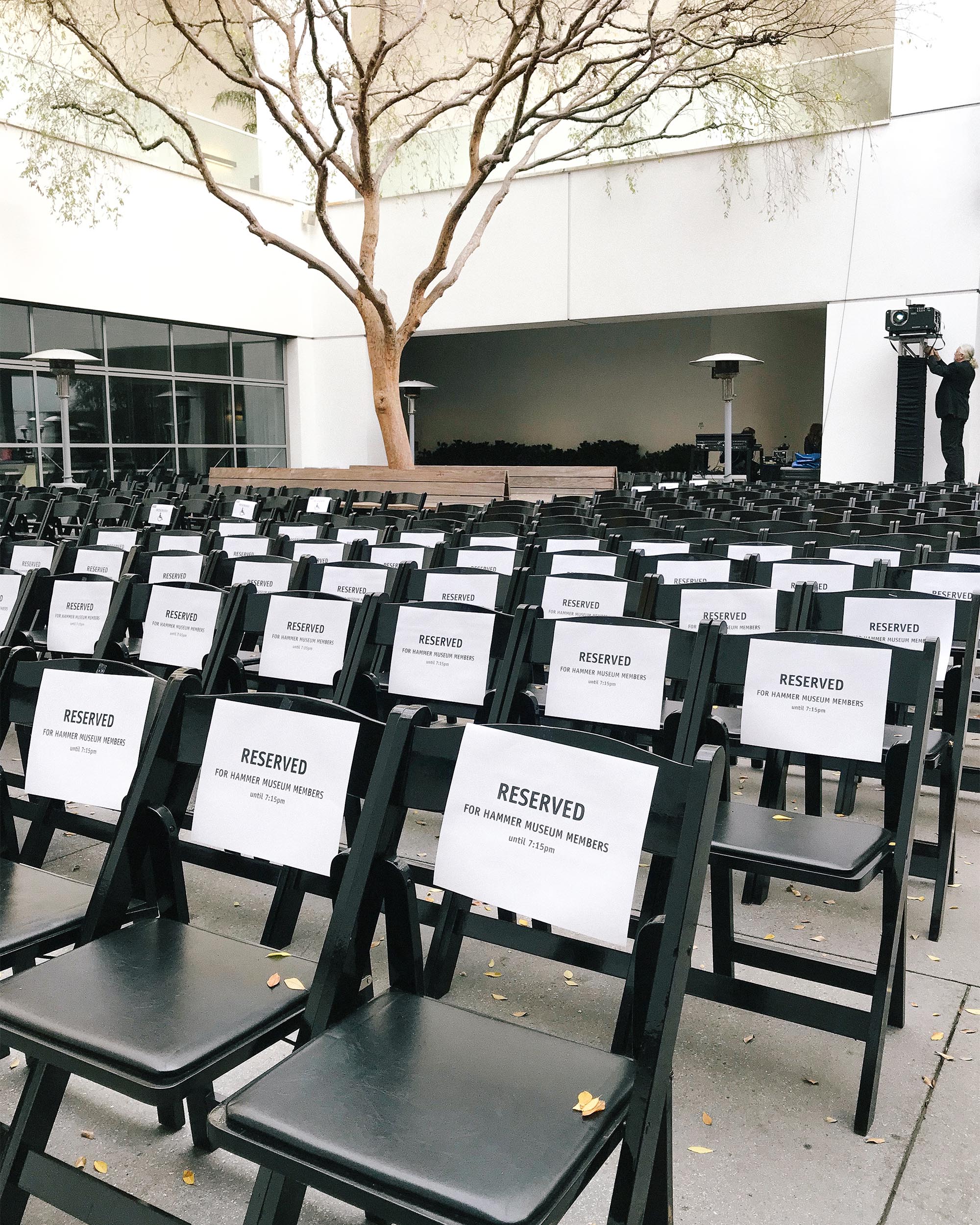
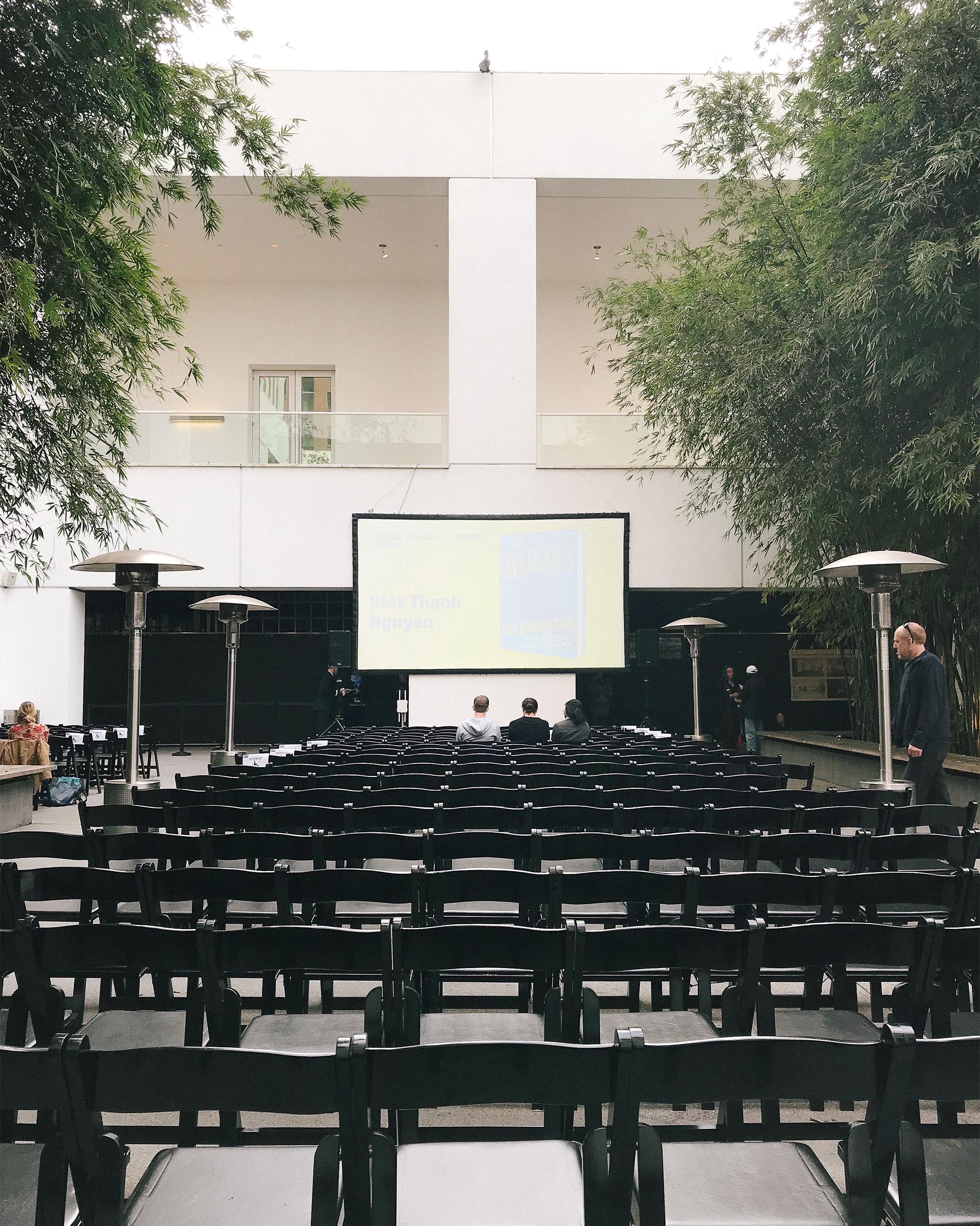
A few weeks ago, The Hammer Museum hosted a special screening of An Inconvenient Sequel: Truth to Power with special guest Former Vice President, Al Gore. Though we weren’t able to sit in the theatre with Gore, we still got a sweet spot in the courtyard to view the documentary and listen to him speak.
The film is a sequel to Al Gore’s 2006 documentary, An Inconvenient Truth. Gore travels the world with activists to meet with governmental leaders and influential figures in his continual fight against climate change. We got to go behind the scenes as he openly speaks about his passion and his struggles against humankind’s most threatening issue.
Whether or not you have seen the first film, we think An Inconvenient Sequel: Truth to Power is worth the watch. For those that feel like the fight against climate change is a losing one, you may find a sense of optimism after this documentary. While there were feelings of sadness and despair, there were also feelings of hope and encouragement. The documentary is a thought-provoking one that provides facts, statistics, and scenes from the effects of climate change, in addition to the progress we’ve made with green energy and green policies. Still, that is not enough. Gore’s underlying message, “there’s no time to waste,” and this is our wakeup call.
Have you seen the An Inconvenient Sequel: Truth to Power? Did you feel the same way we felt? What did you think?
Steven is a 26-year male who is single and ready to mingle (he told us to put that). All jokes aside, Steven is currently a Research & Development (R&D) Engineer for a lithium-ion battery company. He works with electric vehicles, helping to shift our needs away from fossil fuel dependence. When he isn’t smooth talking the ladies, he enjoys hiking, camping, playing basketball, and playing board games.
What does ‘sustainability’ mean to you? Sustainability is being conscious of my impact and living in a way to offset it. As an R&D Engineer, I’m focused on resource management. My company finds ways to move from fossil fuels and shift towards renewable energy. Knowing how limited our resources are has allowed me to reflect on my impact because once our resources are gone, the effects will not be reversible.
How do you personally incorporate sustainability into your life? I don’t read papers or forums about sustainability, but I do try to be conscious of my surroundings and our resources. Water is limited in California so I’m very conscious about water conservation. I don’t take long showers at home. At restaurants, I don’t ask for more water than I need. In other ways, I’ll recycle at home or I’ll compost when there are bins available.
What do you think is misleading about sustainability? Well, sustainability has varying degrees. It is important to realize that a lot of the things we do now may not be considered “sustainable” five to ten years from now. As technology and research continue to make groundbreaking advances, people as a whole have to adopt new practices. For example, five years ago, San Jose passed a law in support of reusable bags by charging people for plastic bags –– and eventually, the entire state of California followed suit. Someday, the same practice may take place where restaurants may charge additional fees for people who want disposable cups in support of reusable cups. From a technological standpoint, solar panel efficiency is growing at an exponential rate. Ten years from now, the current state of the art solar panels may be deemed “inefficient” and considered less sustainable.
“By not doing something, we are contributing to the problem … Issues can only move forward because everyone is combating it together.”
When did you realize the importance of sustainability? I am heavily influenced by my surroundings and my peers. In high school, I was introduced to reusable bags when San Jose implemented a fee for plastic ones. San Jose also has a “request water rule” at restaurants where you’ll only receive water if you ask for it. I became more involved in sustainable practices when I entered college and joined Sustainable UCR, an organization focused on the environment and sustainability. The organization made me more open-minded because I was surrounded by those who cared about and practiced sustainability. The more I talked about the issues, the more I was able to reflect upon those actions for myself. I also had friends in college who composted and recycled. When I see them apply mindfulness into their everyday lives, I realized that it didn’t take as much effort or time as I thought it would. It helped me understand that small actions go a long way.
You love being in the outdoors. How has that affected your views on the environment and sustainability? When I’m hiking, I notice there is a lot of trash on the ground. I try to pick up as much as I can and throw them away later. It’s a small action, but it has made me more conscious of the environment. If everyone put in the effort to throw away their trash, it would help a lot to keep the space clean. I have a friend who just came back from Japan and he mentioned how clean the streets were. That may be because people are more self-aware there than here [America]. We have this sense of entitlement and think that it’s not our responsibility. People have this notion, “Someone gets paid to pick up this trash. Why should I do it?” It’s a little frustrating, because, why can’t we all just throw our trash away?
The government has an important role in implementing “green” laws, for example, the banning of plastic bags in San Jose. What are your views on the government’s impact on the environment? Politics has a huge influence on how people feel about the environment. If we’re talking about climate change, a large percentage of scientists in America believe that climate change is real. Still, there is a small percentage of scientists that deny climate change and are probably being paid off by big oil companies to misinterpret or present wrong data. Money in oil is big and I think there’s a lot of dirty politics that prevent people from being more sustainable. For example, some companies push Tesla away because there are big automobile companies that have an upper hand in the market.
“It’s not an us against them. Really it’s all us together against the problem … What you do today, will determine the future.”
In your opinion, if the government plays a big role in changes, what would you say to someone who thinks they can’t make a difference on their own? Yes, the government does have a huge influence, but that’s not to discourage the small changes we do in our everyday lives. Changing policies is a macroscopic point of view, while understanding and changing your own impact is a microscopic point of view. If we did our own research and educate ourselves, we can be more influential on our own rather than wait for policies to change. By not doing something, we are contributing to the problem and not helping with environmental issues. Issues can only move forward because everyone is combating it together. So yes, your efforts do matter.
What has been the most challenging part of living a sustainable lifestyle? Definitely putting in a more conscious effort. I do all the “easy” things like turn off the lights, conserve water, recycle, bring my own reusable bags when shopping, and reuse old boxes. I don’t do more than the “norm,” which I feel is the same with most people. Like, I don’t compost even though I know I should. I think it’s hard to break people’s habits when it becomes “inconvenient” for them. But it’s doable to our change habits –– you just have to try.
Any last words? Don’t view the fight as “It’s us against them.” Really, it’s all us together against the problem. There’s so much that we can do to revert the problems, so we have to focus on the present –– because the present affects the future. What you do today, will determine the future. We can only make changes together.






 tinycaravan